Why Your Cold Emails Land in Spam (and How to Fix It)
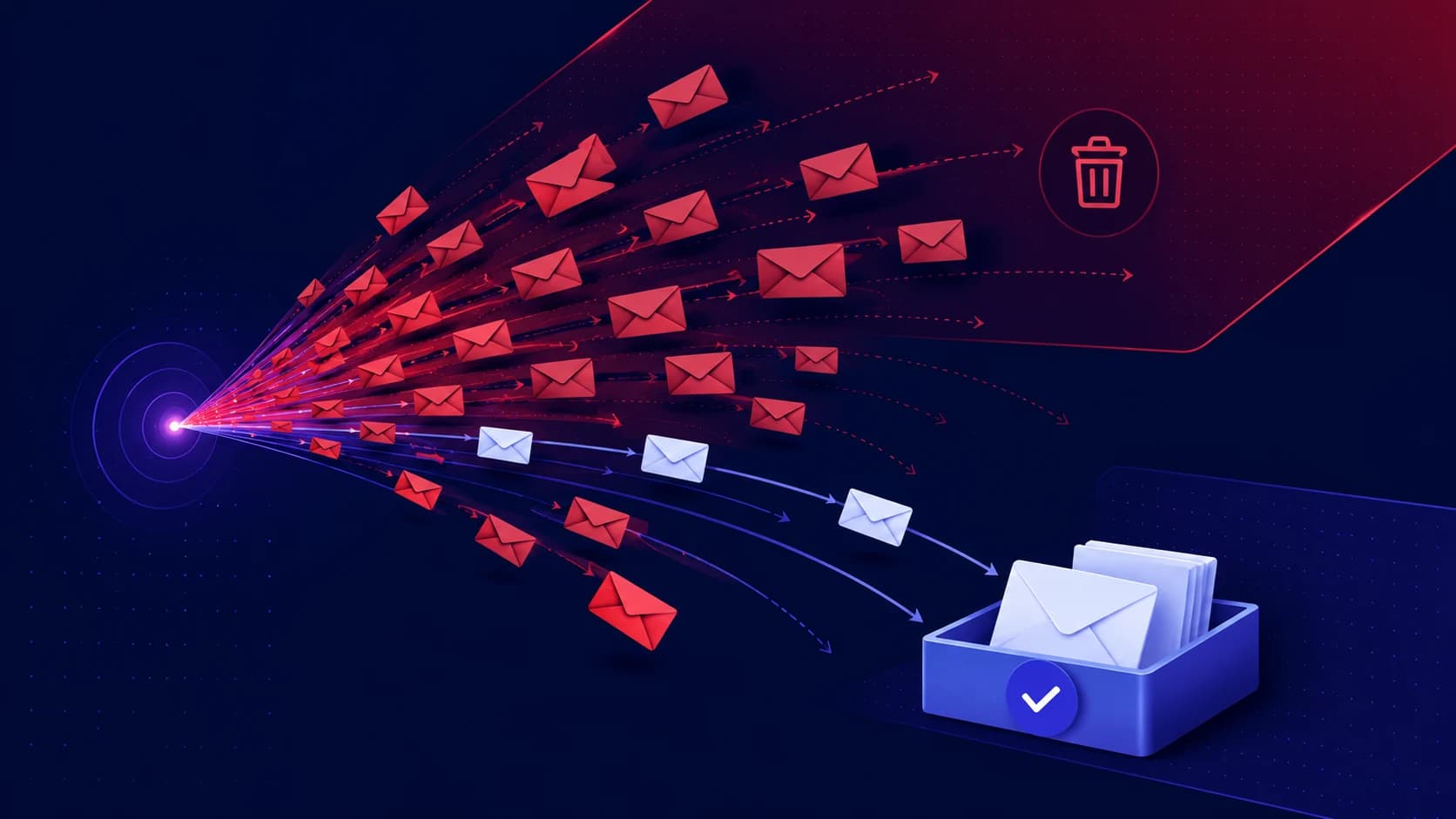
You're sending good, relevant cold emails to real people — and your open rates are mysteriously terrible. Before you blame your copy, check the uncomfortable possibility: a large share of your messages are never being seen at all. They're being routed straight to spam.
Spam filtering isn't one switch. Mailbox providers score every message across several dimensions, and outreach email trips more of them than any other type. Here are the real reasons it happens, in roughly the order they matter.
1. Your authentication is missing or broken
This is the foundation. If your domain doesn't have valid SPF, DKIM, and DMARC records, providers treat your mail as suspicious by default — and since 2024, Gmail and Yahoo will outright reject high-volume senders without them. If you're not 100% sure these are set up correctly, start here: our plain-English guide to SPF, DKIM & DMARC walks through each one, or you can just run your domain through the free checker to see what's missing.
2. Your domain or IP reputation is damaged
Mailbox providers keep a running reputation score for your sending domain and IP. Send to bad addresses, get marked as spam, or send from a domain that's been abused, and that score tanks — dragging even your best emails down with it.
The worst case is landing on a blacklist (also called a DNSBL) like Spamhaus or Spamcop. Once you're listed, a big chunk of your mail is blocked outright, and many senders don't even know it happened. The checker flags blacklist hits, and Zeqo Mail monitors the major lists daily so you find out the day it happens — not weeks later when your reply rate has already collapsed.
3. You're sending from the wrong domain
A classic mistake: running cold outreach from your primary domain. One spam complaint spike and you've poisoned the reputation of the domain your customers and password resets rely on. Best practice is to send cold email from a separate, dedicated domain (e.g. get-yourbrand.com), fully authenticated, and warmed up gradually before you scale.
4. You skipped the warm-up
A brand-new domain sending 500 emails on day one looks exactly like a spammer. Reputation is built slowly. Start with a handful of sends per day to engaged recipients and ramp up over several weeks. New domains also benefit from an aging period before any real volume.
5. Your content trips the filters
Content matters less than reputation, but it still counts. Common triggers in cold email:
- Spammy phrases ("free", "guarantee", "act now", "100%")
- A single large image with little or no text
- Link shorteners or too many links
- Misleading subject lines that don't match the body
- No plain-text version and no working unsubscribe path
6. Low engagement signals
Modern filters watch what recipients do. If your emails are consistently ignored, deleted unread, or marked as spam, providers learn to filter you preemptively. Tighter targeting and a genuinely relevant offer beat volume every time.
The inbox checklist
Run through this before your next campaign:
- SPF, DKIM, and DMARC all pass on your sending domain
- Sending from a dedicated outreach domain, not your primary one
- Domain warmed up and ramped gradually
- Not on any major blacklist
- Clean, validated recipient list (no spam traps)
- Plain-text alternative and a clear unsubscribe option
- Subject line honest and matched to the body
The hard part is staying fixed
Most deliverability advice assumes a one-time fix. The reality is that your authentication can break, your domain can get blacklisted, and your reputation can slip — all without warning, and all invisible until your numbers crater. Check your domain now with the free email checker, and if you send email that matters, let Zeqo Mail watch it every day so you hear about problems before your prospects do.
Check your domain in seconds
Enter any domain for a full deliverability test — SPF, DKIM, DMARC, sender reputation, and MX — with a plain-English verdict and the exact fix for anything that's broken.